Which Sustainable Building Materials Work Best in Bulgaria's Climate?
Timber, aerated concrete, brick, lime plaster and wood-fibre insulation work best for Bulgaria's hot summers and cold winters. I can report this as an architect with 7+ years of experience in Germany, Austria and Bulgaria, as of 2026.
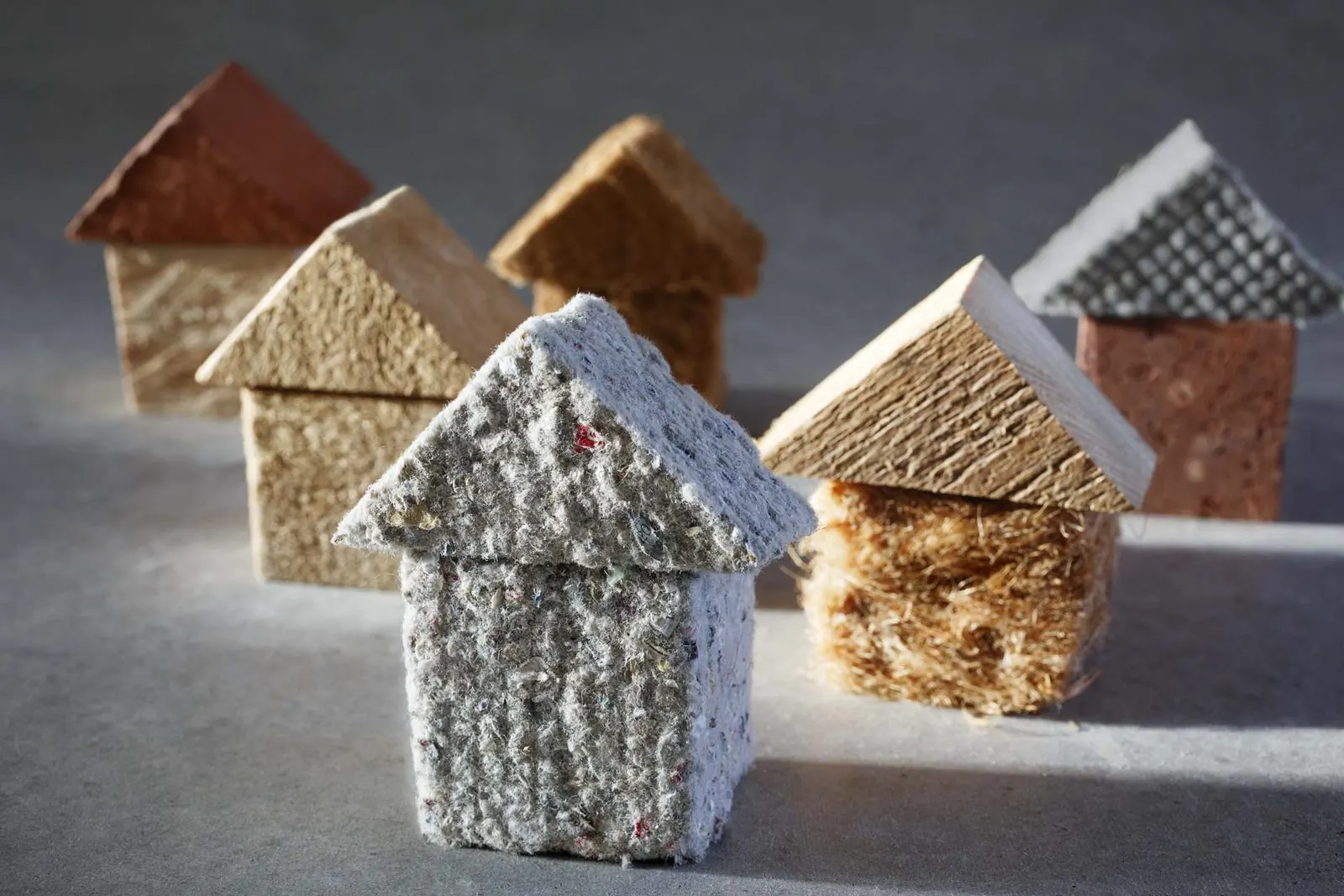
The best sustainable materials for Bulgaria’s continental climate, with cold winters and hot summers, are those that insulate well, last long and come from nearby: timber, aerated concrete, brick, lime plaster, wood-fibre insulation and clay roof tiles.
What does “sustainable” mean in a building?
It is more than “natural”. I weigh six criteria: embodied carbon, performance for heating and cooling, durability, recyclability, effect on indoor air and local availability. Some natural materials have a high footprint and some manufactured ones are very good. Judge the whole building.
Bulgarian law already sets the frame: buildings must be designed and built for energy saving and sustainable use of natural resources.
Buildings are designed, built and maintained in accordance with the basic requirements […]: […] 6. energy economy and heat retention; 7. sustainable use of natural resources. — Art. 169 (1) ZUT (Закон за устройство на територията), lex.bg
Which structural materials work in Bulgaria?
- Timber frame: stores carbon, builds fast, integrates insulation and works in Bulgarian seismic conditions. Look for FSC/PEFC certified wood.
- Cross-laminated timber (CLT): for larger spans, premium cost, fast installation.
- Aerated concrete (AAC): produced in Bulgaria, lightweight, good insulation, recyclable.
- Compressed earth blocks: local soil and excellent thermal mass, but labour-intensive and in need of weather protection.
- Brick: durable, locally made, good thermal mass.
Which insulation is best for the Bulgarian climate?
Wood fibre, cellulose, hemp, cork and sheep’s wool are the low-carbon options. Wood fibre has excellent summer performance because it delays the heat. Cellulose is cost-effective and fills gaps. Cork and hemp cost more. EPS and XPS polystyrene perform well thermally but have a high footprint and are hard to recycle; I use them only where nothing else solves the detail. Read also my article on energy-efficient homes.
Which finishes, floors, roofs and windows are sustainable?
- Walls: lime plaster (traditional, breathable), clay plaster (indoors, regulates humidity), timber cladding, local natural stone.
- Floors: solid timber, natural linoleum, stone or ceramic. Avoid PVC vinyl.
- Roof: clay tiles from Bulgarian producers, or metal with a very long life. Green roofs need extra structure.
- Windows: timber or timber-aluminium frames, with triple glazing, low-e coating and warm-edge spacers for Bulgarian winters.
What should I check before choosing?
- Availability: prefer Bulgarian products over long imports.
- Skills: some materials need experienced craftsmen. See my guide to choosing a construction company.
- Cost: think in lifecycle cost. My budget guide shows the numbers.
- Rules: fire, structural and thermal requirements apply to every material.
I choose materials together with the design in my architecture service, and a consultation is the quickest way to see what suits your plot.
Which ready-made designs suit the Bulgarian climate?
| Project | Area | Best for | Price |
|---|---|---|---|
| C-101 Mountain Chalet | 80 m² | Mountains, cold winters | €2,850 |
| B-103 Mountain Home | 211 m² | Rhodopes, Balkan Mountains | €5,380 |
| A-102 Mediterranean Villa | 236 m² | Black Sea coast | €5,415 |
| A-101 Traditional House | 180 m² | Thracian Plain | €4,320 |
| B-101 Family Home | 216 m² | Versatile | €4,670 |
| B-102 Luxury Residence | 318 m² | Any location | €8,100 |
| C-102 Compact Home | 97 m² | Compact, efficient | €2,900 |

Frequently Asked Questions
What is the most sustainable wall material for Bulgaria?
There is no single answer. Timber frame stores carbon, aerated concrete is made locally, and brick and lime plaster are durable and traditional. I judge by embodied energy, winter and summer performance and availability.
Are eco-friendly materials more expensive?
Often slightly at the start, but they can pay back through lower heating costs and longer life. Compare lifecycle costs, not only the building cost.
Do sustainable materials need extra approval in Bulgaria?
No special approval, but they must meet the same fire, structural and thermal requirements as any other material.
Which insulation do you recommend for the Bulgarian climate?
Wood fibre or mineral wool for good summer and winter performance; cellulose is cost-effective. The thickness matters more than the product, so I calculate it for your building.
Follow us on Google Search